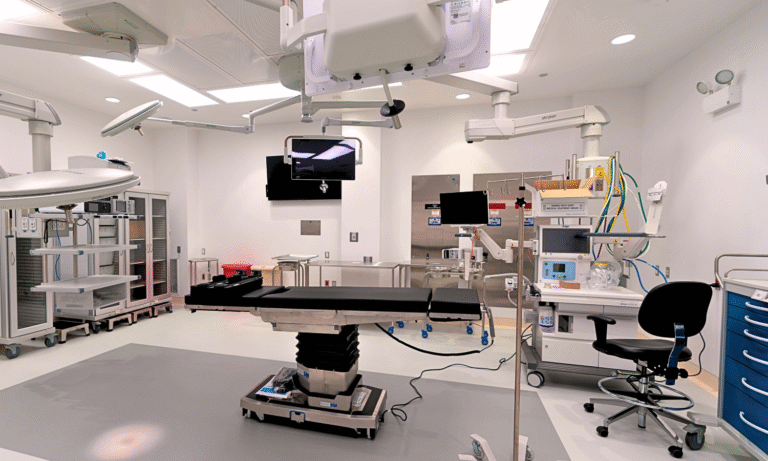
Ambulatory Surgery Centers (ASCs) play a vital role in today’s healthcare system, allowing patients to receive high-quality surgical care in specialized outpatient settings. These facilities are designed for efficiency, but they also operate under strict expectations for cleanliness, infection prevention, and patient safety.
Unlike a traditional office building or commercial property, a surgery center requires cleaning protocols that support both regulatory compliance and clinical outcomes. Every waiting room, procedure room, recovery area, and staff workspace contributes to the overall safety of patients, physicians, and employees.
For facility managers and administrators, maintaining a clean environment is about much more than appearance. A comprehensive cleaning program helps reduce infection risks, supports accreditation efforts, protects valuable medical equipment, and reinforces confidence among patients and staff.
Whether your surgery center manages a single specialty or performs hundreds of procedures each week, following consistent cleaning standards is one of the most important investments you can make in your facility.
Why Surgery Centers Require Specialized Cleaning
Not every healthcare facility has the same cleaning requirements.
While medical office buildings, physician practices, and outpatient clinics all benefit from professional healthcare cleaning, ambulatory surgery centers present unique challenges because invasive procedures are performed daily. Patients may have weakened immune systems or open surgical sites, making infection prevention a top priority.
This means surgery centers require cleaning programs that go beyond standard janitorial services. Cleaning schedules, disinfectant selection, documentation, and staff training all need to align with the facility’s operational and compliance requirements.
Areas that often require specialized attention include:
- Procedure rooms
- Pre-operative and recovery areas
- Sterile storage spaces
- Waiting rooms
- Restrooms
- Staff break rooms
- Administrative offices
Each area carries different levels of risk and should be cleaned according to clearly established procedures.
Consistency Is Just as Important as Cleanliness
One of the biggest misconceptions about healthcare cleaning is that success is measured simply by whether a space looks clean.
In reality, consistency is often just as important.
Every member of the cleaning team should follow documented procedures that outline what needs to be cleaned, which products should be used, how frequently tasks should be completed, and how the work is verified. Without standardized processes, even experienced teams can produce inconsistent results.
A reliable cleaning program helps ensure that every procedure room, hallway, and patient area receives the same level of attention every day rather than depending on individual habits or assumptions.
For surgery centers pursuing accreditation or maintaining compliance, consistency also provides confidence that cleaning expectations are being met across the entire facility.
High-Touch Surfaces Require Extra Attention
Throughout the day, countless surfaces are touched by patients, physicians, nurses, and staff members.
These high-touch areas represent some of the greatest opportunities for cross-contamination if they are not cleaned and disinfected consistently.
Common examples include:
- Door handles
- Light switches
- Bed rails
- Procedure tables
- Computer keyboards and touchscreens
- Medical carts
- Countertops
- Waiting room seating
- Shared equipment controls
Cleaning these surfaces requires more than simply wiping them down. Staff should follow manufacturer recommendations for approved disinfectants and allow proper contact times so products can work effectively.
Developing a routine for monitoring high-touch areas helps reduce variation and supports a safer care environment.
Cleaning Products Matter More Than Many People Realize
Not every disinfectant is appropriate for every healthcare environment.
Facilities should use EPA-registered disinfectants that are compatible with both healthcare standards and the surfaces being cleaned. Using the wrong product can damage sensitive medical equipment, shorten the lifespan of flooring and finishes, or fail to provide the intended level of disinfection.
Equally important is ensuring products are used correctly.
Staff should understand:
- Proper dilution requirements
- Required contact times
- Safe application procedures
- Storage guidelines
- Manufacturer recommendations
Choosing the right products is only effective when they are paired with consistent training and proper usage.
Documentation Supports Compliance and Accountability
Healthcare organizations are increasingly expected to demonstrate that cleaning protocols are being followed consistently.
Documented cleaning procedures and inspection records provide valuable evidence that tasks are completed according to established standards.
Many surgery centers maintain records for:
- Daily cleaning schedules
- Between-procedure cleaning
- Terminal cleaning
- Supervisor inspections
- Corrective actions
- Equipment maintenance
Documentation also makes it easier to identify recurring issues, improve training, and prepare for accreditation reviews or internal quality audits.
Rather than viewing documentation as additional paperwork, successful facilities treat it as part of an effective quality assurance program.
Staff Training Should Be Ongoing
Healthcare cleaning standards continue to evolve as new products, technologies, and infection prevention recommendations become available.
For that reason, training should never be considered a one-time event.
Regular education helps reinforce best practices while ensuring cleaning teams remain confident in their responsibilities.
Topics often covered through ongoing training include:
- Infection prevention principles
- Proper use of disinfectants
- Personal protective equipment (PPE)
- Safe chemical handling
- Cleaning sequence and workflow
- Equipment operation
- Quality assurance expectations
Well-trained teams are better equipped to deliver consistent service while adapting to changes in healthcare regulations and facility needs.
Quality Assurance Helps Maintain High Standards
Even the strongest cleaning program benefits from routine evaluation.
Quality assurance allows facility managers to verify that cleaning procedures are being completed consistently and provides opportunities to identify potential issues before they become larger problems.
Depending on the facility, quality assurance may include visual inspections, supervisor walkthroughs, ATP testing, fluorescent marker testing, or routine performance audits.
The goal is not simply to identify mistakes but to create a culture of continuous improvement.
When cleaning providers actively monitor their own performance and communicate results, facility managers gain greater confidence that standards are being maintained throughout the building.
Choosing the Right Healthcare Cleaning Partner
For many surgery centers, maintaining compliance is a shared responsibility between facility leadership and their commercial cleaning provider.
When evaluating a cleaning partner, administrators should look beyond pricing alone and consider factors such as healthcare experience, staff training, quality assurance processes, responsiveness, and the ability to customize services for the facility.
Some helpful questions to ask include:
- Does the company specialize in healthcare environments?
- How are employees trained on healthcare cleaning protocols?
- What quality assurance processes are in place?
- How are cleaning issues documented and resolved?
- Can services be adjusted as the facility grows or operational needs change?
Choosing a provider with experience in medical environments can help reduce risk while supporting long-term operational goals.
How Bee Line Supports Surgery Centers and Healthcare Facilities
Bee Line provides customized Medical Cleaning Services designed to meet the unique needs of healthcare environments, including ambulatory surgery centers, hospitals, specialty clinics, medical offices, and outpatient facilities.
Rather than relying on one-size-fits-all cleaning programs, Bee Line works closely with healthcare organizations to develop customized service plans that support consistency, accountability, and long-term facility performance.
Healthcare leaders looking to strengthen their environmental cleaning programs can also explore our Hospital Cleaning Checklist for additional best practices and operational guidance.
If your surgery center is evaluating its current cleaning program or preparing for future growth, contact Bee Line to learn how our healthcare cleaning specialists can help support your facility.
Frequently Asked Questions
How often should a surgery center be professionally cleaned?
Cleaning frequency depends on the area of the facility and the procedures being performed. Procedure rooms should be cleaned between cases and receive terminal cleaning according to facility protocols, while common areas and administrative spaces should follow established daily schedules.
What makes surgery center cleaning different from traditional commercial cleaning?
Surgery centers require specialized cleaning procedures that support infection prevention, regulatory compliance, and patient safety. Staff training, documentation, disinfectant selection, and quality assurance all play a larger role than in traditional commercial environments.
Why is documentation important for healthcare cleaning?
Cleaning documentation helps demonstrate consistency, supports accreditation efforts, and provides accountability by verifying that required tasks are completed according to established procedures.
What should facility managers look for in a healthcare cleaning provider?
Look for a provider with experience in medical environments, ongoing employee training, documented quality assurance processes, responsive communication, and the ability to customize cleaning programs based on your facility’s needs.
How do professional medical cleaning services support patient safety?
Consistent cleaning and disinfection help reduce the risk of cross-contamination, maintain cleaner healthcare environments, and support infection prevention efforts that protect patients, staff, and visitors.
About The Author